Pricing a home in the Conejo Valley (CA) is part strategy, part local knowledge, and part buyer psychology. The right asking price should reflect recent comparable sales, your home’s condition, neighborhood demand, and how buyers are searching for conejo valley homes right now. Price too high and you risk sitting; price too low without a plan and you may leave money on the table.
Written by Nicki LaPorta (DRE #01233940) and Karen Crystal (DRE #01346860), estate agents with Compass and the #1 Compass team in the Conejo Valley from 2020 through 2022. We list and sell homes across Thousand Oaks, Westlake Village, North Ranch, Lake Sherwood, Hidden Valley, Agoura Hills, Calabasas, and Malibu, and the pricing guidance below reflects how we advise our own sellers. Karen holds a B.S. in Business Administration from USC and the Graduate REALTOR® Institute (GRI) designation. Last reviewed September 2026.
What makes Conejo Valley home pricing different?
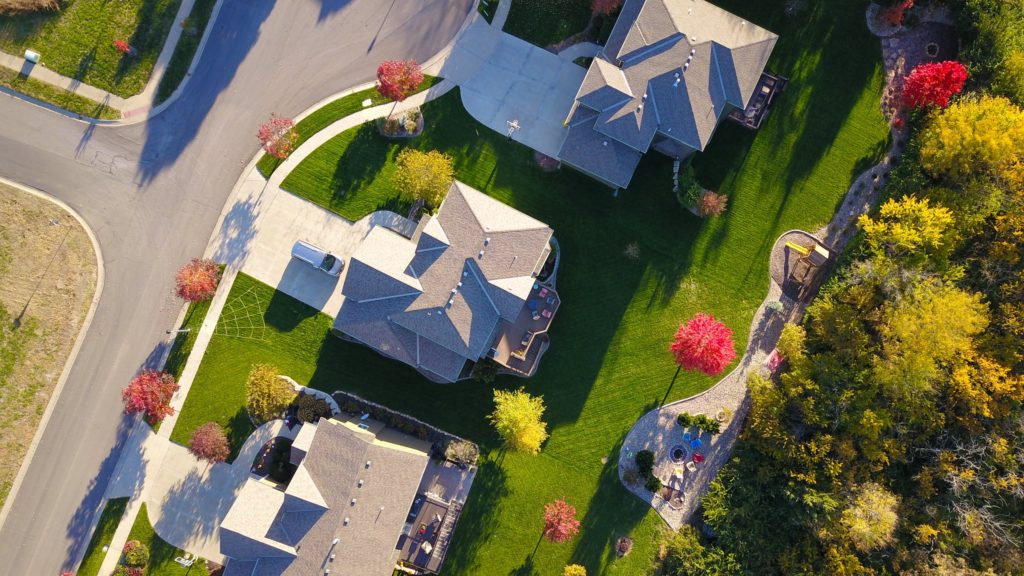
Conejo Valley home pricing is highly local because the area is not one single, uniform housing market. Communities such as Thousand Oaks, Newbury Park, Westlake Village, Oak Park, Agoura Hills, Lake Sherwood, Hidden Valley, and Dos Vientos can attract different buyer pools and price expectations, even when homes look similar on paper. If you are still deciding where your home sits in that hierarchy, our breakdown of the most desirable communities in the Conejo Valley is a useful starting point. The Conejo Valley also crosses parts of Ventura and Los Angeles counties, which can influence buyer preferences, commuting patterns, school considerations, and perceived value.
That means a broad online estimate or countywide median price can only take you so far. A four-bedroom home in one neighborhood may not compete directly with another four-bedroom home fifteen minutes away if the lot, school zone, remodel quality, HOA, view, or lifestyle setting is different. In conejo valley real estate, the most accurate pricing decisions usually come from narrowing the buyer’s comparison set.
The goal is not simply to choose the highest number that sounds possible. The goal is to choose a price that makes qualified buyers feel urgency, creates strong showing activity, and still protects your negotiating position.
Start with the right comparable sales

Comparable sales, often called “comps,” are the foundation of a credible pricing strategy. Appraisers use recently sold similar properties to help form an opinion of market value, and lenders rely on that appraisal process to evaluate whether the purchase price aligns with the property’s value. The National Association of REALTORS® consumer guide to the appraisal process explains how that review works from the lender’s side.
For sellers, the key word is “similar.” A strong comp is not just any nearby sale. It should share as many meaningful traits as possible with your home, including:
- Location: Same neighborhood, tract, school boundary, or buyer search area when possible.
- Property type: Single-family home, condo, townhome, estate property, or acreage.
- Size and layout: Similar square footage, bedroom count, bathroom count, and functional floor plan.
- Condition: Comparable updates, deferred maintenance, finishes, and curb appeal.
- Lot and setting: Flat usable yard, view lot, cul-de-sac, backing open space, or busy street exposure.
- Timing: Recent closed sales are usually more useful than older sales, especially if market conditions have shifted.
In the Conejo Valley, small differences can become big pricing factors. A remodeled kitchen, pool, downstairs bedroom, larger lot, newer roof, or direct access to trails may change how buyers compare your home. On the other hand, over-improving beyond neighborhood expectations does not always translate dollar-for-dollar into a higher sale price.
When we build a comparative market analysis, we do not stop at the spreadsheet. We drive the comps, look at what the photos left out, and check whether a sale closed with concessions, a rate buydown, or a repair credit that quietly lowered the net price. Two homes can close at the same number and tell completely different stories about what buyers were actually willing to pay.
Look beyond sold prices
Closed sales tell you where the market has been. Active listings, pending sales, and expired listings help you understand where the market is going. Much of that detail lives in the agent-facing databases rather than the public portals, which is worth knowing if you are wondering what the real estate MLS is and why its data differs from what you see online.
Active listings show your current competition. These are the homes buyers will see next to yours online and in person. If your home is priced above similar active listings, buyers need a clear reason to choose it, such as better condition, a stronger location, or more desirable features.
Pending sales can be even more useful, although the final price may not be public yet. A home that went pending quickly can signal where buyers are responding. A similar home that reduced its price before going under contract may suggest the original list price was too ambitious.
Expired and canceled listings are cautionary examples. They often show what buyers rejected. Sometimes the issue was presentation, access, marketing, or condition, but price is commonly part of the story.
How should you choose your initial list price?
Your initial list price should be close enough to market value to attract serious buyers immediately while leaving room for negotiation if the local market requires it. The first week or two of a listing often brings the most attention because buyers who have been waiting for the right home are already watching. If the price feels out of reach compared with similar options, those buyers may never schedule a showing.
A practical approach is to build a pricing range first. Your low end reflects a number likely to attract fast attention. Your high end reflects the top of what the market may support if your home has standout advantages. The recommended list price usually sits where buyer interest, seller goals, and recent evidence overlap.
Before deciding, ask these questions:
- Which three homes will buyers compare against yours first? If your home is not clearly stronger, pricing above them may be risky.
- What search brackets matter? Many buyers search in price bands, so crossing a major threshold can reduce visibility.
- What is your timing? A seller who needs to move quickly may use a different strategy than one with flexibility.
- How much feedback will you accept? If showings are light or comments repeat the same concern, be ready to adjust.
- What is your fallback plan? Decide in advance when you would consider a price improvement.
Pricing is not a one-time guess. It is a strategy that should be reviewed once the market responds.
We put those answers in writing before a home goes live, including the review date and the trigger that would prompt an adjustment. Sellers who agree to that plan while everyone is calm make far better decisions in week three than sellers who are debating it for the first time after a quiet weekend of showings.
Factor in condition and presentation

Condition affects price because buyers calculate both cost and effort. A home that feels clean, maintained, and move-in ready may justify stronger pricing than a similar home that needs visible repairs. In competitive segments of conejo valley real estate, presentation can help buyers feel confident making a stronger offer, which is why we treat staging a luxury property as a pricing decision rather than a decorating one.
Focus first on improvements that reduce doubt. Repair obvious maintenance issues, refresh paint where needed, improve lighting, clean windows, address landscaping, and declutter heavily used rooms. These updates may not all raise the appraised value directly, but they can improve buyer perception and reduce objections during showings.
It is also important to separate repairs from upgrades. Repairs protect value by removing red flags. Upgrades create appeal, but they should be chosen carefully. If you are preparing to sell soon, a full renovation may not be necessary. Our guide to which home improvements are worth making walks through typical cost-to-recoup ranges, and a local real estate professional can help identify which changes are likely to matter most to buyers in your specific price range.
Account for disclosures and hazard designations
Pricing in California is not separate from disclosure. Sellers of residential property are generally required to complete a Real Estate Transfer Disclosure Statement and related natural hazard disclosures under California Civil Code Section 1102 and following, covering known material facts about condition along with flood, earthquake fault, seismic, and fire hazard designations. Because buyers receive that packet, anything it reveals will eventually be priced in. It is better to know what it says before you set the number than to renegotiate after a buyer reads it.
In the Conejo Valley this matters more than in most of Southern California. Large portions of the hillside and open-space-adjacent neighborhoods we work in fall inside Very High Fire Hazard Severity Zones, which are classified by CAL FIRE and published through the Office of the State Fire Marshal. That designation can affect defensible space requirements, hardening expectations, and, most importantly for pricing, what a buyer will be quoted for insurance. Two otherwise identical homes can support different prices if one carries a materially higher insurance cost, so we review a property’s zone and recent insurance experience before recommending a list price.
The same logic applies to Mello-Roos assessments, HOA dues, solar leases, permit history on additions, and any unpermitted square footage. Buyers and appraisers both discount uncertainty. Resolving what you can, and disclosing the rest early, protects the price you set.
Understand buyer psychology in online searches
Most buyers begin their search online, which means your price must work in a digital environment as well as in a negotiation. If a buyer sets a maximum search price at a round number, a listing just above that number may not appear in their results. This is one reason strategic price brackets matter.
For example, a home listed slightly above a common search ceiling may miss buyers who would have loved the property and possibly stretched after seeing it. A home priced just under a key threshold may receive more views, more saves, and more showing requests. More attention does not guarantee a higher sale price, but it creates opportunity.
Buyer psychology also affects perceived fairness. When buyers see a price that is noticeably above recent similar sales, they may assume the seller is unrealistic. When the price aligns with evidence, buyers are more likely to engage, ask questions, and write offers.
Can you rely on an online home value estimate?
An online estimate can be a useful starting point, but it should not be the final word on pricing a home in the Conejo Valley (CA). Automated tools often miss details that local buyers care about, such as views, remodel quality, street position, floor plan flow, privacy, HOA differences, or neighborhood-specific demand.
Online values are built from available data, not from walking through your home. They may not know that your backyard backs to open space, that your kitchen was recently remodeled, or that the house across the street has the same square footage but a very different layout. They also may not capture the emotional pull of a well-presented property.
Use online estimates as one input, then compare them against:
- A local comparative market analysis.
- Recent nearby sales with similar features.
- Active listings competing for the same buyer.
- Pending sales and days-on-market patterns.
- Your home’s condition, upgrades, and showing readiness.
The more unique your property is, the more important local interpretation becomes. In our experience the gap between an automated estimate and an actual sale price is widest exactly where the Conejo Valley is most distinctive: view lots, equestrian and acreage properties, guard-gated communities, and heavily customized homes.
Watch the market, not just the calendar
Seasonality can influence real estate activity, but market conditions matter more than the month alone. The California Association of REALTORS® notes in its seller market snapshot that these views use data such as median price and sales activity, and that sales data may be affected by seasonal factors.
This matters because a pricing strategy that worked in a hotter market may not work when buyers have more choices. Interest rates, inventory, employment confidence, insurance considerations, and general affordability can all affect how aggressively buyers act. Instead of assuming the market is “good” or “bad,” look at what is happening in your exact segment.
A few signs your price may need adjustment include:
- Strong online views but few showing requests.
- Showings without second visits or offers.
- Repeated feedback that the home feels overpriced.
- Similar homes going pending while yours remains active.
- A need to compete against new listings entering at sharper prices.
Price improvements are not failures when they are timely and strategic. Waiting too long can make a listing feel stale, while a decisive adjustment can bring the home back into buyer conversations. Drifting instead of deciding is one of the avoidable mistakes sellers make when selling a home, and it is the one we see cost sellers the most.
Build a pricing strategy before you list
A good pricing plan should include the list price, the reasoning behind it, and the response plan after launch. This keeps decisions grounded instead of emotional once the home is public.
Before listing, create a simple plan:
- Define your likely buyer. Consider whether your home appeals most to move-up buyers, downsizers, first-time buyers, luxury buyers, or relocation buyers.
- Set the evidence-based range. Use comps, competition, and condition to establish a realistic low-to-high pricing band.
- Choose the launch price. Select the number that supports your goals and maximizes exposure in buyer search ranges.
- Prepare the home carefully. Presentation, access, photography, and showing readiness all support the price.
- Measure early activity. Review showings, feedback, online engagement, and competing listings during the first days on market.
- Adjust if needed. If the market does not respond, make a clear decision rather than drifting.
This type of plan gives sellers more control. It also helps reduce the stress of second-guessing every showing or comment.
The best price is supported by evidence
Pricing conejo valley homes well is not about chasing the highest possible list price. It is about positioning your home so the right buyers recognize its value quickly. In a market with distinct communities, varied property types, and buyers who compare carefully, local context matters.
The strongest conejo valley home pricing strategy combines recent comparable sales, current competition, property condition, search behavior, and seller goals. If you are preparing to sell, start with the evidence, stay flexible once buyers respond, and work with a local professional who understands how Conejo Valley buyers think. The right price can help your home stand out, attract serious interest, and move you toward a stronger sale.
Nicki LaPorta (DRE #01233940) and Karen Crystal (DRE #01346860) are estate agents with Compass and were recognized as the #1 Compass team in the Conejo Valley from 2020 through 2022. They represent buyers and sellers in Thousand Oaks, Westlake Village, North Ranch, Lake Sherwood, Hidden Valley, Agoura Hills, Oak Park, Calabasas, Hidden Hills, and Malibu, with a focus on new construction and luxury estate property. Karen holds a B.S. in Business Administration from the University of Southern California and the Graduate REALTOR® Institute (GRI) designation. Reach Nicki at (805) 390-6591 or Karen at (805) 625-0304 for a comparative market analysis of your home.
Sources and editorial note
This article draws on the authors’ direct experience listing and selling homes in the Conejo Valley, together with the National Association of REALTORS® consumer guide to the appraisal process, California Association of REALTORS® market data, California Civil Code Section 1102 and following, and Fire Hazard Severity Zone classifications published by the CAL FIRE Office of the State Fire Marshal.
Published September 2026. Last reviewed September 2026. This article is general information about pricing strategy and is not legal, tax, appraisal, or investment advice. Market conditions change, and every property is different. Consult a licensed real estate professional, attorney, or tax advisor about your specific situation. Nicki LaPorta and Karen Crystal are licensed by the California Department of Real Estate. Equal Housing Opportunity.