Choosing horse boarding stables in the Conejo Valley & Hidden Hills starts with matching your horse’s daily needs to a facility’s actual care routine—not simply its location or appearance. This article identifies a local boarding starting point, explains what to verify about Hidden Hills access, and provides practical ways to compare care, riding opportunities, costs, and communication. Use it to build a shortlist and make barn visits more productive.
As luxury real estate agents serving Hidden Hills, Hidden Valley, and the Conejo Valley, we work with equestrian and ranch properties throughout the region—and boarding is often the first step toward horse ownership on your own land, or the arrangement that bridges the gap while you search. This guide pairs that local perspective with published guidance from university extension programs and equine veterinary organizations, so you can ask better questions and verify the answers.
Key takeaways
- Write a care profile for your horse before you contact any barn.
- Treat “full care” and similar labels as starting points—get services in writing.
- Confirm Hidden Hills community access separately from any boarding agreement.
- Compare total monthly cost, not the advertised base rate.
- Ask to see written biosecurity, emergency, and evacuation procedures.
How do you choose the right horse boarding stable?
Choose a stable by confirming that its daily care, housing, turnout, staff responsibilities, and riding arrangements suit your horse and your schedule. Ask for specific explanations and written service details rather than relying on labels such as “full care.” Penn State Extension’s guide to boarding horses describes several boarding arrangements and emphasizes that the boarding contract should specify the accommodation and management requirements for each horse.
Before contacting barns, write a short profile of your horse. Include the current feeding routine, turnout arrangements, handling preferences, riding workload, and any care instructions supplied by your veterinarian. Then describe your own expectations: how often you visit, whether you need lessons, and which tasks you can realistically handle.
Separate requirements from preferences. Reliable delivery of an agreed feeding routine might be essential; a viewing lounge might simply be pleasant. This distinction helps you avoid choosing an attractive property that cannot provide the services you need.
Local starting points and access considerations
For a horse boarding Conejo Valley search, Rancho Potrero Community Equestrian Center is a concrete starting point. Conejo Recreation & Park District lists boarding services, public trail access, arenas, turnout areas, and round pens among its amenities. Contact the operator directly about current openings, care packages, eligibility, and visiting arrangements; an amenities listing does not establish availability.

Other local equestrian facilities serve different purposes. CRPD describes Walnut Grove Equestrian Center as a facility managed by Ride On Therapeutic Horsemanship, while Conejo Creek Equestrian Park provides public equestrian arenas and pens. Neither description should be treated as confirmation of available boarding. Use these distinctions to separate potential homes for your horse from places that may support your riding activities.
Hidden Hills requires a separate access conversation. Its community handbook publishes equestrian trail guidelines, and association materials have documented conditions for nonresident horse owners boarding within the community. Before committing to a property, ask the Hidden Hills Community Association to confirm current registration, identification, riding, and guest requirements. Do not assume a boarding agreement automatically resolves community access.
For either area, test the drive during your normal visiting hours. Include the time needed to enter the property, park, retrieve equipment, and reach your horse. Judge convenience against the visit you will actually make, not just the mileage shown on a map. Hidden Hills is a gated city, so build guard-gate entry into your timing when visiting barns or trails there.
What should horse boarding services include?
Horse boarding services should clearly identify who provides feed and water, cleans the accommodation, manages turnout, checks horses, and communicates concerns. The agreement should also distinguish included work from separately billed assistance. Boarding arrangements vary, so compare written responsibilities rather than assuming that two similarly named packages offer identical care.
Use this checklist when requesting service descriptions:
- Feeding: Confirm the supplied forage and feed, feeding times, owner-supplied items, and approval process for changes.
- Water: Ask who checks water sources, how they are cleaned, and what happens if equipment fails.
- Cleaning and bedding: Request the cleaning schedule, bedding policy, and arrangements for extra work.
- Turnout: Establish frequency, duration, individual or group arrangements, and circumstances that change the schedule.
- Additional handling: Identify charges for blanketing, fly gear, appointment holding, hand-walking, or other requested assistance.
- Observation and communication: Name the person responsible for reporting concerns and explain the after-hours contact process.
Bring the discussion back to your actual week. If you cannot visit on weekdays, ask which tasks staff will perform without your presence. If your horse needs special management, request confirmation that the facility accepts those responsibilities before arranging a move.
Match the care arrangement to your availability
Ask the manager to walk through a normal day under the proposed package, from the first feed to the final check. Mark every task that remains yours and identify backup help for holidays, illness, or work travel. If a package includes training, request a separate explanation of professional rides, lessons, scheduling, and cancellation arrangements.
Look beyond the stall during your barn visit
Request a scheduled tour that includes the proposed accommodation, turnout spaces, feed storage, water sources, grooming areas, and riding facilities. Ask to see the areas your horse would actually use rather than a representative stall elsewhere on the property. Bring your care profile so the conversation stays specific.
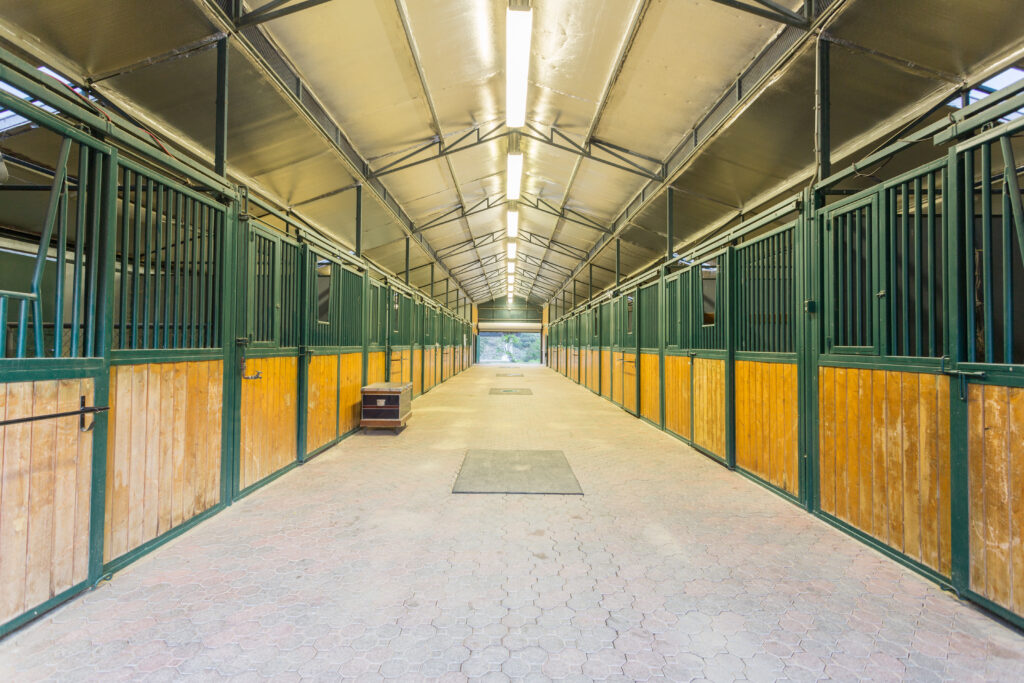
For water and feeding, inspect the practical details with the manager. Penn State Extension advises that fresh water remain available and free of contamination, and recommends professional assistance when developing a balanced feeding program. Ask how the barn checks these essentials and follows individual feeding instructions.
For housing and turnout, discuss your horse’s size, handling needs, and existing routine. Ask the manager to explain fencing inspections, gate checks, shade arrangements, and how turnout assignments are made. Where suitability is uncertain, involve your veterinarian or another qualified professional who knows your horse.
Useful follow-up prompts include:
- Show me the space proposed for my horse and explain its daily cleaning routine.
- Describe how you introduce a horse to a turnout arrangement.
- Explain what replaces normal turnout when that space is unavailable.
- Walk me through how staff record and communicate a requested care change.
Match the riding facilities to your routine
Start with what you plan to do most weeks. If you expect regular lessons, ask whether your preferred instructor can teach there and what approval is required. If independent riding is your priority, review arena schedules, shared-use rules, and any restrictions that could affect your usual visiting time.
Request a realistic explanation of arena availability. Ask about lessons, training sessions, maintenance closures, lighting, and access after rain. Rather than asking only whether the property has an arena, establish when you would be permitted to use it and under what conditions.
Treat trail access with the same care. Hidden Hills publishes trail-use rules covering matters such as permitted users, courtesy, and staying off private property. Ask the relevant operator or association to explain the routes you may use, the permissions you need, and how closures are communicated.
Within your Conejo Valley equine search, keep a separate column for riding opportunities outside each boarding property. Confirm access independently, including whether you would need transport. This lets you assess the whole riding arrangement without mistakenly crediting a barn with amenities it does not provide. For route ideas, see our guides to horseback riding in Ventura and Los Angeles and the best Thousand Oaks hiking and local trails, then confirm current equestrian access with each trail operator.
How can you compare boarding costs fairly?
Compare the total cost of the services your horse will actually receive, not the advertised base rate alone. Request a written quote that combines accommodation, routine care, required programs, and your expected extras. Penn State Extension notes that service level and specialized management affect boarding fees, making the scope of care essential to a meaningful comparison.
Give every shortlisted barn the same care profile. Ask each manager to identify what is included, what is optional, and what would be unavailable. Avoid filling gaps with assumptions, particularly when one quote appears substantially simpler than another.
| Cost category | Details to request |
|---|---|
| Base board | Accommodation, included feed, cleaning, and facility access |
| Routine extras | Turnout, blanketing, supplements, and appointment holding |
| Riding program | Required lessons, training commitments, and additional ride fees |
| Equipment and storage | Tack space, trailer parking, and storage restrictions |
| Occasional assistance | Vacation coverage, special handling, and additional monitoring |
| Payment and departure | Deposit, billing schedule, notice period, and refund terms |
Keep routine veterinary care, farrier work, transport, and other ownership expenses in your broader budget. Ask which services the barn coordinates and which you must arrange yourself. Request written confirmation of any special arrangement that influences your decision.
Review health procedures and emergency responsibilities
Ask to see the barn’s written arrival and disease-prevention procedures. The American Association of Equine Practitioners defines biosecurity, in its general biosecurity guidelines, as practices intended to prevent infectious disease introduction and limit its spread. Its guidance emphasizes developing facility protocols and updating them as circumstances and knowledge change.
The Equine Disease Communication Center recommends facility-specific planning, observation of horses, separation of new arrivals, and dedicated or appropriately cleaned equipment. Use these topics to ask how the proposed barn handles incoming horses, shared equipment, and suspected illness. Let your veterinarian advise on the requirements appropriate for your horse rather than choosing a protocol from a general checklist.
Emergency discussions should be equally concrete. Request the contact sequence when an owner cannot be reached, the process for obtaining veterinary assistance, and the arrangements for transport. Clarify which decisions require your authorization and provide written instructions for the facility to review.
Also request the property’s evacuation plan. Ask who organizes loading, how transport is arranged, where horses may be taken, and how owners receive updates. Confirm whether your horse can participate in the proposed arrangements or whether you need a separate plan.
Evaluate communication and the boarding agreement
Use your initial conversations to establish how the relationship would work. Ask who handles daily questions, who approves service changes, and how urgent concerns differ from routine messages. Request an explanation of coverage when the usual manager is absent.
Colorado State University Extension advises barn managers to document biosecurity policies and make expectations clear, including through the boarding contract. Look for that same clarity across the services you are considering: responsibilities should be understandable before your horse arrives, not negotiated repeatedly afterward.
Review the full agreement alongside the quote and barn rules. Check the assigned care package, visiting arrangements, instructor policies, service-change process, and departure requirements. If a clause is unclear or has significant legal implications, seek qualified advice rather than relying on a verbal interpretation.
References can help you prepare follow-up questions. With permission, speak to current boarders about how the barn communicates, handles requested changes, and delivers the agreed routine. Treat those accounts as individual experiences, then verify important details directly with management.
Make the final choice and prepare the move
Once you have comparable information, use a simple decision process:
- Remove unsuitable options. Set aside barns that cannot meet essential care or access requirements.
- Compare the remaining trade-offs. Weigh the written service package, total budget, riding arrangements, and travel commitment.
- Resolve unanswered questions. Request another conversation or visit before paying a deposit.
- Confirm the move in writing. Agree on arrival timing, accommodation, required documents, and the care instructions staff have accepted.

Prepare a concise handover sheet with contact details, the agreed routine, approved professionals, and relevant veterinary instructions. Ask how the facility wants feed, equipment, and records labeled or delivered. Arrange an early follow-up conversation to review whether the agreed services are being delivered and whether anything needs clarification.
Planning ahead: from boarding to keeping horses at home
Many boarders eventually consider keeping their horses on their own property. If that is your long-term goal, the same care profile you built for barn shopping becomes a checklist for evaluating land: turnout space, existing barns and stalls, water, arena potential, and trail access. Before making an offer, confirm with the city or county planning department how many horses a parcel may keep and what permits apply to barns or arenas. Our guide to buying horse properties in Ventura County walks through those considerations, and our overview of the top communities for ranch homes in LA and Ventura highlights neighborhoods with an equestrian lifestyle.
The right boarding choice is the one you can understand, verify, and sustain. Begin with suitable local options, confirm access rather than assuming it, and compare the details that shape your horse’s ordinary day. A thoughtful visit and a clear written agreement are more useful than an impressive amenities list alone.
Sources consulted: Penn State Extension, the American Association of Equine Practitioners, the Equine Disease Communication Center, Colorado State University Extension, Conejo Recreation & Park District, and the Hidden Hills Community Association. This article is general information, not veterinary or legal advice; confirm details directly with facility managers, your veterinarian, and qualified advisors. Last reviewed November 2026.