Westlake Lake lakefront living in Westlake Village combines a waterside setting with boating and fishing opportunities governed by the Westlake Lake Management Association, or WLMA. The lake and dam are privately owned and operated by the association, so access works differently than it does at a public recreation lake. For anyone exploring lakefront real estate, the goal is to match the view with verified access, manageable responsibilities, and a home that works for everyday life.
Why we wrote this guide: Nicki LaPorta (DRE #01233940) and Karen Crystal (DRE #01346860) lead a Compass team based in the Conejo Valley, recognized by Compass Finance as the #1 Compass team in the region from 2020 to 2022. We represent buyers and sellers throughout Westlake Village, and lakefront purchases consistently raise questions that a standard home search does not. This guide organizes the considerations we review with clients and points you to the official sources you should check yourself.
What is lakefront living on Westlake Lake really like?
Living beside Westlake Lake means choosing a home within a privately managed lake environment, where recreation and waterfront use come with association rules. WLMA identifies boating and fishing opportunities for eligible homeowners, guests, yacht club members, and residents of the Westlake community. The practical appeal depends on how you want to experience the water—and which privileges apply to the property you choose.
Start by picturing an ordinary weekday rather than a holiday weekend. Would you use a waterfront patio before work? Would boating become a regular activity, or would you mostly enjoy looking across the lake? Those answers help separate features you will use from features that simply photograph well.
A useful exercise is to write two lists: what you want from the lake and what you need from the house. Keep storage, kitchen layout, stairs, parking, and workspace on the second list. A beautiful outlook should complement those essentials, not distract from a floor plan that makes your routine harder.
Also consider your comfort with shared standards. Review the rules—and the association documents explained in our HOA 101 guide—as part of evaluating the lifestyle, not as paperwork to handle after choosing a home. The right fit should feel appealing with those conditions understood.
Location details matter here, too. Westlake Lake sits along the Los Angeles–Ventura county line, which is why WLMA maintains separate CC&Rs for each county. If you are unsure which side a property falls on, our explainer on what county Westlake Village is in walks through the differences.
Waterfront frontage, views, and access are different priorities
When comparing lakefront properties, investigate three things separately: the physical relationship to the shoreline, the views from the home, and the documented ability to use waterfront facilities. Ask for records supporting each feature rather than treating a listing description as the final answer. For a broader primer on shoreline, insurance, and maintenance considerations, see our guide to buying waterfront property.

Use these distinctions to make your search more precise:
- Shoreline position: Walk the route between the living spaces and the water-facing outdoor area. Consider steps, gates, furniture placement, and the ease of carrying boating equipment.
- Usable views: Check the outlook while seated in the living room or dining area, not only while standing beside a window. Decide which rooms deserve the strongest connection to the lake.
- Dock arrangements: Request written confirmation of any private dock, shared facility, or slip arrangement associated with the property. Ask who administers it and what conditions apply.
- Outdoor privacy: Look toward neighboring patios and back toward the house from permitted viewing points. Decide whether the setting provides the balance of openness and separation you prefer.
WLMA’s rules distinguish private docks, district community docks, and marina arrangements, with different conditions governing their use. A nearby dock should therefore prompt questions, not assumptions about what comes with a purchase.
Keep your priorities ranked during showings. If enjoying the view matters more than owning a boat, concentrate on sightlines and comfortable outdoor seating. If boating is central to your plans, resolve the access questions before letting finishes or staging influence the decision.
What boating and fishing activities are allowed?
Westlake Lake supports regulated boating and fishing, but it is not a setting for unrestricted watersports. The Westlake Yacht Club’s lake information states that powerboats generally must use electric propulsion, with specified operational exceptions. It also identifies restrictions on boat dimensions and prohibits activities or equipment including jet skis, water skiing, inflatable boats, and stand-up paddleboards.
That distinction matters when imagining weekends on the water. Before buying a boat—or assuming an existing boat will be suitable—submit its specifications to WLMA and ask about approval, registration, storage, and launch procedures. Make that confirmation part of your planning rather than an expense you discover after moving.
Tip from Nicki & Karen: During your contingency period, ask the seller for copies of any existing boat registration, dock approvals, and recent WLMA correspondence tied to the property. Reviewing those documents while you still have options is far easier than requesting them after closing.
Boating plans should begin with approval
According to WLMA’s Rules and Regulations, the association requires annual watercraft registration and associated insurance documentation. Its rules also establish an invasive-species prevention process involving advance inspection, possible quarantine, and approval before equipment enters the lake. Ask for the current requirements before arranging a purchase or delivery.
Think through the less glamorous side of boat ownership, too. Identify where equipment would be stored, how passengers would board, and who would arrange maintenance. A setup that is straightforward to use is more likely to support the relaxed outings you have in mind.
Fishing requires separate preparation
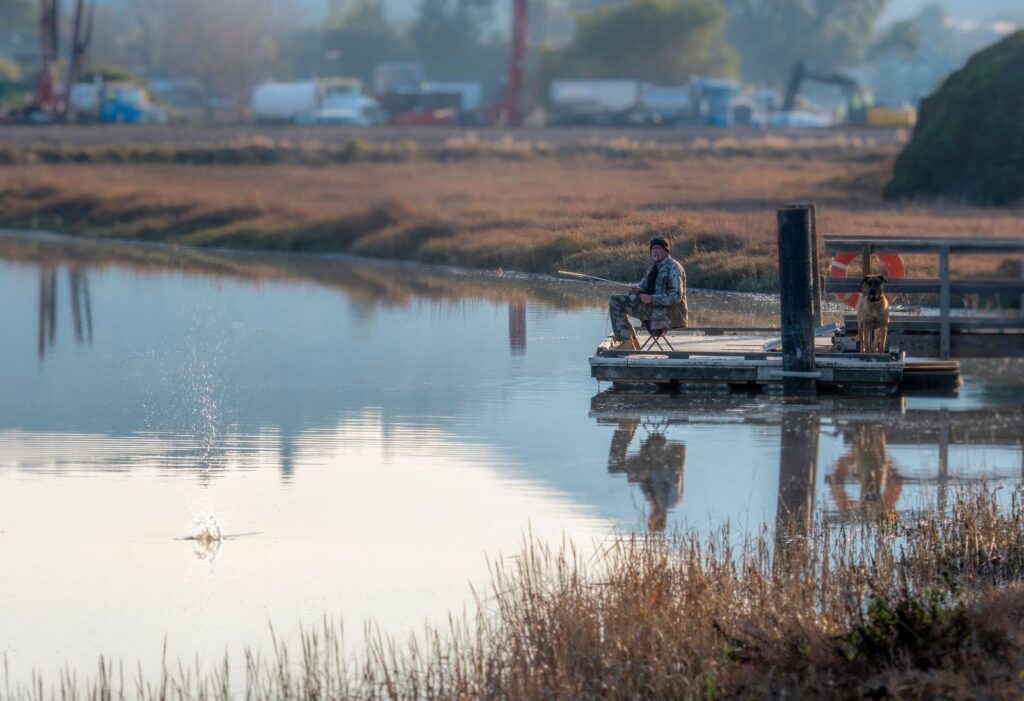
WLMA requires a current fishing badge and explains that anglers aged 16 or older also need a California sport fishing license from the California Department of Fish and Wildlife. Its published guidance calls for barbless hooks, artificial bait, and catch-and-release fishing, with an exception for common carp under association disposal guidelines. A fishing badge does not authorize entry onto private docks, beaches, or community areas.
Before inviting guests, confirm the badge and supervision requirements and obtain the current designated fishing-area information. Keep that guidance with your fishing equipment so visitors understand where they may go. Planning the outing properly helps avoid treating someone else’s shoreline or dock as public space.
Swimming is another important distinction: WLMA prohibits recreational swimming by people and domestic animals, subject to narrow exceptions such as emergencies. If swimming from your backyard is essential to your vision, account for that restriction at the beginning of your search.
Compare homes from the inside out
When touring homes across Westlake Village’s neighborhoods, begin with the way you will actually occupy each room. Sit where a sofa might go, stand at the kitchen work area, and consider how the house functions when guests visit. Then evaluate how the water-facing spaces improve that experience.
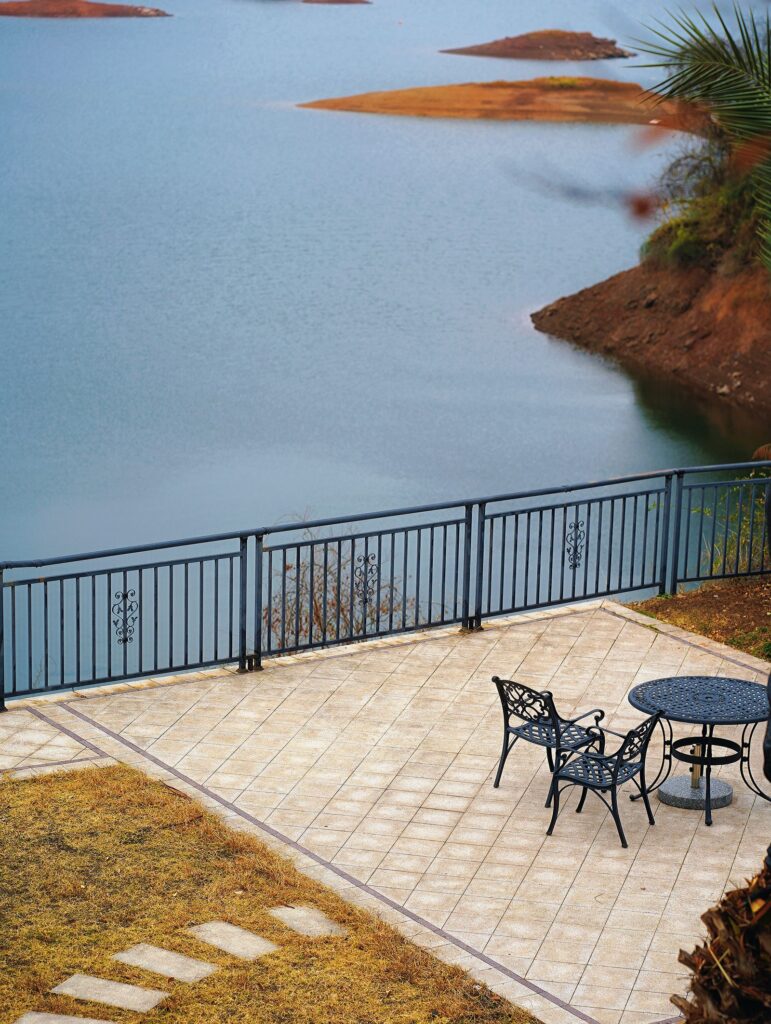
Pay particular attention to the connection between indoors and outdoors. Try doors, note changes in floor level, and check whether a dining table would leave a comfortable circulation path. Picture carrying food outside or bringing cushions and equipment back in at the end of an evening.
Give practical spaces equal attention. Identify a place for life jackets, outdoor supplies, tools, and seasonal items rather than assuming the garage can absorb everything. If you work from home, test whether the room you would use provides the privacy and layout you need.
Return at different times when possible. Compare glare, shade, neighboring activity, and your own sense of privacy instead of relying on a single showing. Take notes from the same locations on each visit so you can compare homes without depending on memory.
For each property, record one compromise you could comfortably accept and one you could not. That simple distinction helps keep a memorable view from overwhelming your broader priorities.
Review docks and outdoor improvements before planning changes
Treat an existing dock as something to document and inspect, not merely an attractive accessory. WLMA’s published dock regulations require applications and approval for new docks, relocation, and repair or replacement. They also require a signed revocable license agreement before covered construction begins.
Request the records available for the property’s dock and ask the association which documents should accompany a transfer. Have an appropriately qualified professional evaluate its condition—our overview of what to expect from home inspections explains how to plan for specialized inspections— and explain any recommended work. Keep physical condition and authorization as separate questions: answering one does not settle the other.
Apply the same discipline to your renovation ideas. Before budgeting for changes, ask which association approvals and local permits would be necessary. Do not base an offer on an unconfirmed assumption that you can enlarge an outdoor area or redesign its connection to the water.
WLMA’s dock regulations describe a perimeter area between the lake boundary adjoining a lot and the water’s edge. Ask your title professional and the association to explain how relevant boundaries, easements, and agreements affect the specific property. Use the documents—not the apparent edge of the lawn—to guide your understanding.
Build a property-specific ownership budget
Approach budgeting as a document-gathering exercise rather than a search for one typical lakefront ownership figure. Request current charges, available financial records, insurance quotes, and inspection findings for each serious contender. Keep estimates clearly marked until the responsible provider or association confirms them.
A useful worksheet includes:
- Association obligations: Ask which organizations apply to the property, what each payment covers, and whether any approved assessments remain outstanding.
- Waterfront arrangements: Request the applicable dock, slip, boat registration, storage, or fishing charges for the activities you intend to pursue.
- Insurance review: Give an insurance professional the address, property details, proposed boat use, and association requirements before requesting coverage options.
- Immediate work: Separate inspection recommendations into work needed promptly, work to monitor, and improvements you simply prefer.
- Ongoing upkeep: Obtain estimates for the home’s actual outdoor materials, landscaping, equipment, and any dock responsibilities confirmed in writing.
These are questions to investigate, not a claim that every property carries every expense. Use the same categories for each home so the comparison stays consistent. A lower purchase price should not end the conversation if important ownership costs remain unresolved.
If you want to assess asking prices, request recent closed sales selected for relevant similarities. Ask the agent to explain differences in condition, view, outdoor layout, and verified access rather than relying on a broad neighborhood average. Keep any discussion of future resale framed as uncertainty, not a promised return.
A focused checklist for your next showing
A productive visit should test both the appeal of the setting and the assumptions behind it. Bring a short checklist, take photographs only with permission, and identify who will answer each outstanding question. Avoid leaving an important issue as a verbal assurance with no follow-up.
- Describe your intended use. Tell your agent whether your priority is the view, outdoor dining, fishing, or boating so the search reflects your actual plans.
- Verify waterfront features. Request documentation for advertised access and dock arrangements, then confirm relevant details with the association.
- Inspect the everyday layout. Check stairs, storage, parking, kitchen function, and the route between the house and outdoor seating.
- Review the current rules. Compare your plans with the association’s requirements before purchasing equipment or planning changes.
- Gather the ownership documents. Request applicable association disclosures, financial information, improvement records, and inspection reports through the appropriate professionals.
- Test life beyond the patio. Drive your usual routes at realistic times and check the errands, appointments, and services that matter to your household.
Afterward, summarize each home in a few sentences without mentioning its staging. Describe what you would enjoy every week, what would require effort, and what remains unverified. This makes the comparison more useful than a collection of attractive photographs.
Choose the waterfront experience you will actually use
The strongest lakefront choice is not necessarily the home with the most dramatic first impression. It is the one whose layout, outdoor spaces, documented access, and ownership responsibilities fit the way you want to live. Let the setting inspire your search, but let careful verification shape the decision.
Start with a clear picture of an ordinary week beside the water. Then compare properties against that picture, resolve unanswered questions, and keep room in your plans for maintenance and upkeep. That approach turns an appealing waterfront idea into a more informed home search.
Sources and how to verify this information
This guide summarizes publicly available guidance from the Westlake Lake Management Association, the Westlake Yacht Club, and the California Department of Fish and Wildlife, reviewed in November 2026. Association rules, fees, and procedures can change, so confirm current requirements directly with WLMA and review the association documents provided during escrow. This article is general information and is not legal, insurance, or financial advice.
Considering a home on Westlake Lake? Nicki & Karen can help you request the right documents, compare lakefront listings, and coordinate the specialized inspections waterfront properties require. Call the team at (805) 625-0304 to start a conversation.